
The Hunger Games: Sunrise on the Reaping (2026) – Film Review
Directed by Francis Lawrence, The Hunger Games: Sunrise on the Reaping takes us back to the dystopian world of Panem for another helping of the deadly competition in which young people are selected in a ceremony known as the Reaping before being forced to fight to the death for the entertainment of the Capitol. It's a premise that has served the franchise well over the years, but with each successive instalment the formula has begun to lose its impact, culminating in what is, by some considerable margin, the weakest entry in the series.
Set 40 years after the events of The Hunger Games: The Ballad of Songbirds & Snakes and 24 years before the original Hunger Games, the story centres on 16-year-old Haymitch Abernathy (Joseph Zada, making his first major film appearance following a number of television roles), a resident of District 12 who finds himself caught up in the 50th Hunger Games, otherwise known as the Second Quarter Quell. To mark the occasion, the Capitol has doubled the number of tributes, with 48 young competitors selected to take part in its barbaric spectacle.
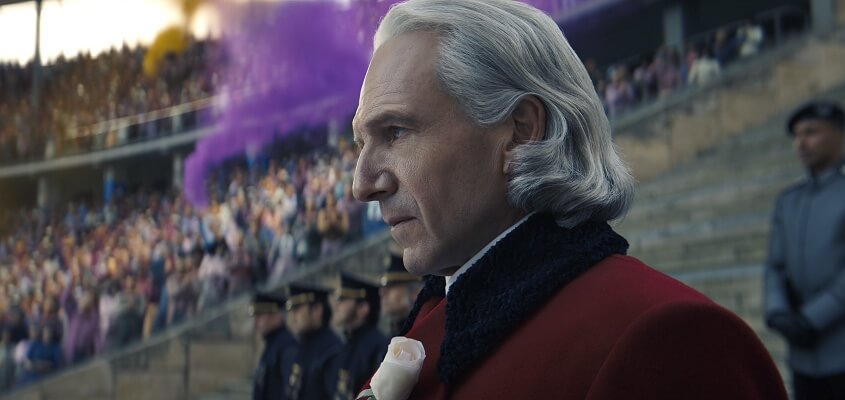
Although technically a sequel to The Ballad of Songbirds & Snakes, there is surprisingly little connecting the two stories beyond their shared District 12 setting and the presence of President Coriolanus Snow, now played by Ralph Fiennes. A very brief scene in which Snow makes reference to his past relationship with Lucy Gray Baird, played by Rachel Zegler in the previous film, is about as close as we get to a meaningful connection. Consequently, anyone coming to Sunrise on the Reaping cold should have little difficulty following the story, or what little there is of one.
The biggest problem is the film's painfully slow pacing. The reaping itself doesn't get underway until well over an hour into proceedings, and by that point, like me, you may already have lost much of your interest. There is an extraordinary amount of time spent establishing a story that really isn't particularly complicated, and very little of it succeeds in making the characters sufficiently interesting to justify the wait.
Nor do things improve significantly once the Games finally begin. Apart from a handful of the principal protagonists, character development among the other tributes is virtually nonexistent. We learn so little about most of these young competitors that when they inevitably become victims of the Games, their deaths carry little emotional weight. What should be shocking and distressing instead leaves you feeling remarkably indifferent.

Equally disappointing is how considerably the violence has been toned down compared with the earlier films. Has Hollywood suddenly become afraid to depict young people killing one another? Almost every death either takes place off-screen or is staged in such poorly lit surroundings that it becomes difficult to make out exactly what is happening. Stranger still, many of the younger competitors meet their ends through circumstances other than direct confrontation with their fellow tributes, further diminishing the brutality that once made the Games so disturbing. It hardly helps that several of these supposedly teenage contestants look as though they are well into their twenties.
The film is also let down by some woefully poor performances, although Mckenna Grace is one of the few cast members to emerge with any real credit. Glenn Close, playing Drusilla Sickle, is particularly disappointing, delivering a performance so exaggerated and hammy that it occasionally borders on embarrassing. For an actress of her considerable experience and ability, it's a remarkably misjudged turn.
Perhaps the film's greatest weakness, however, lies in the casting of its leading man. One of the strengths of the previous Hunger Games films was the charisma of their central performers. Whether Jennifer Lawrence as Katniss Everdeen or Tom Blyth as the younger Coriolanus Snow, both brought a compelling screen presence that helped carry their respective stories.
Sadly, Joseph Zada brings very little of that same quality to the role of Haymitch Abernathy. The character, of course, was memorably played by Woody Harrelson in the original films, but Zada's attempts to capture something of Harrelson's mannerisms come across as little more than a poor imitation. Rather than establishing his own interpretation of Haymitch, he delivers a performance that lacks the personality and charisma needed to hold the film together.
Ultimately, The Hunger Games: Sunrise on the Reaping feels like a watered-down, almost PG version of a series that was once considerably darker, more compelling and far more willing to confront the horrors at the heart of its premise. With its sluggish pacing, underdeveloped characters, surprisingly restrained violence and a leading performance that fails to engage, this is a hugely disappointing return to Panem.
For a franchise that was already showing signs of running out of ideas, Sunrise on the Reaping may just prove to be the final nail in the coffin.